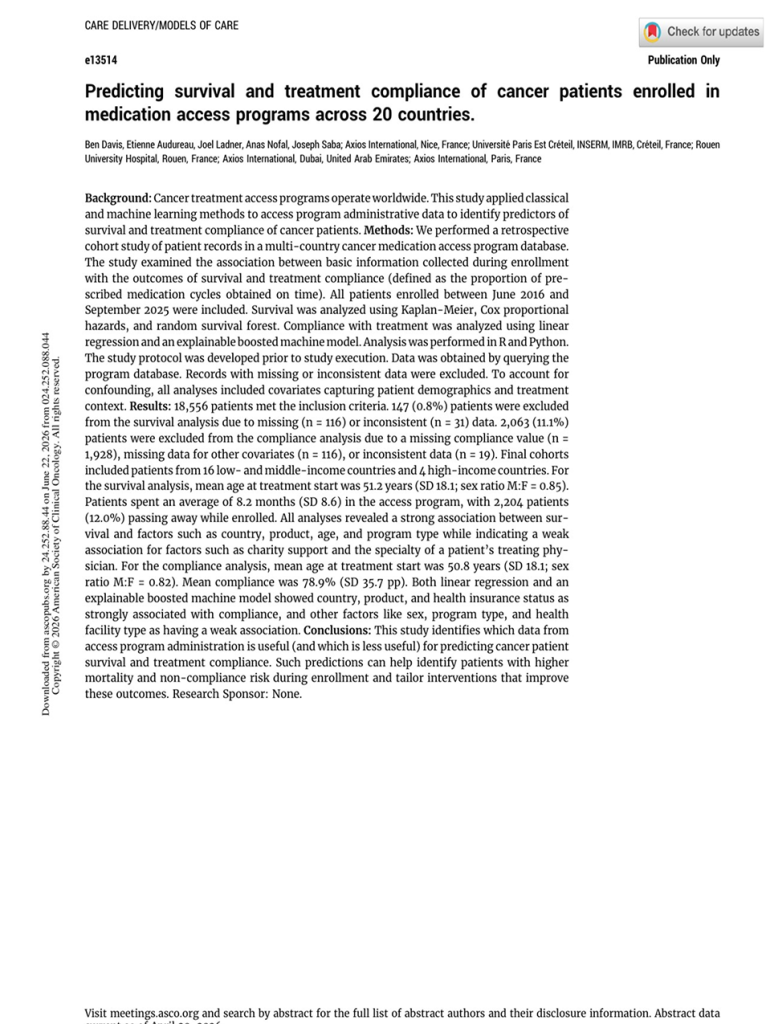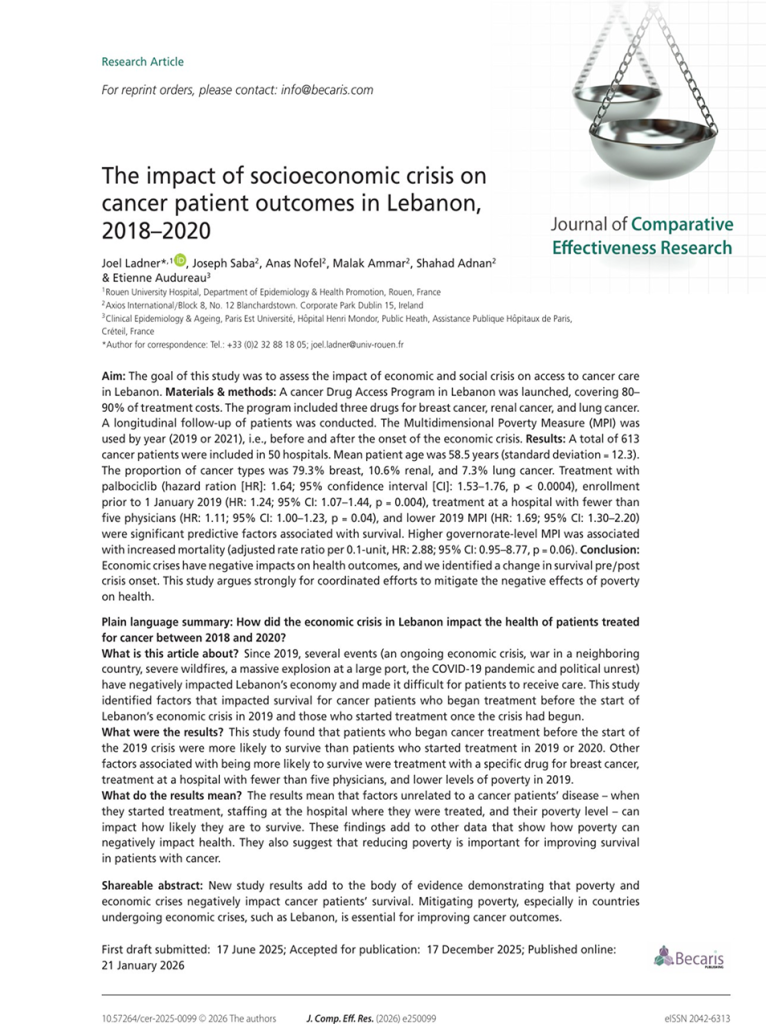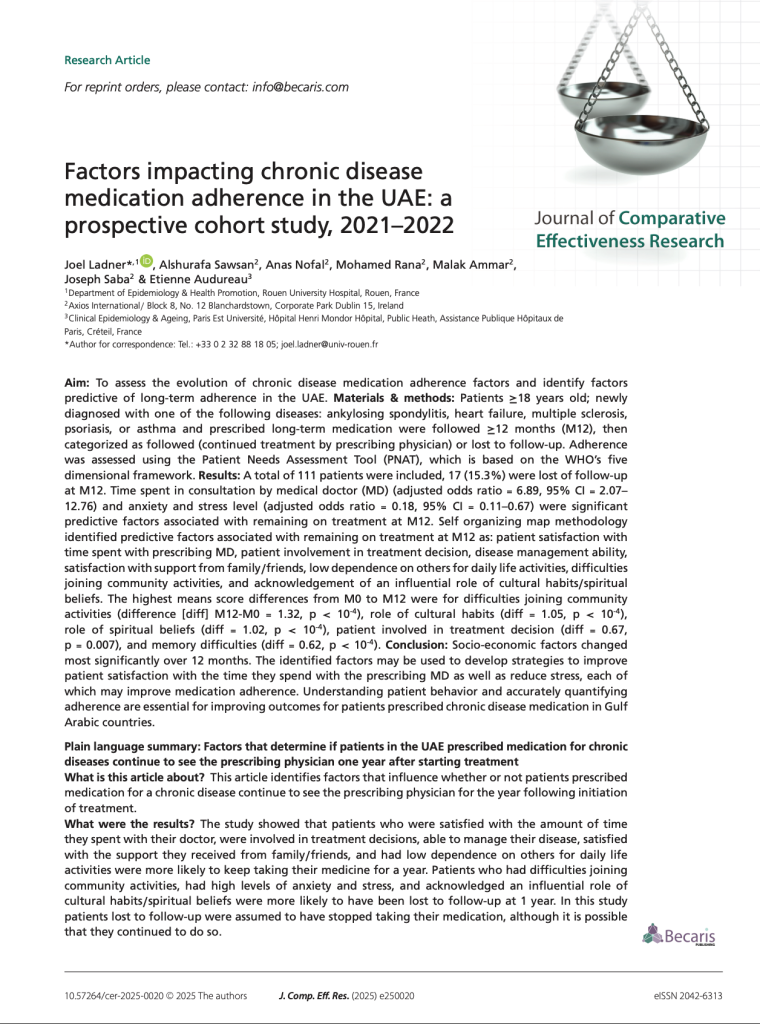

This study analyzed nearly 5,000 patients across 47 institutions in 44 countries enrolled in the same leukemia drug access program (GIPAP) to identify what institutional characteristics predict how many patients get enrolled and how well they do afterward. Having a hematologist or oncologist on staff boosted enrollment, while institutions with research capabilities and higher patient volumes saw meaningfully better patient survival.
Publication
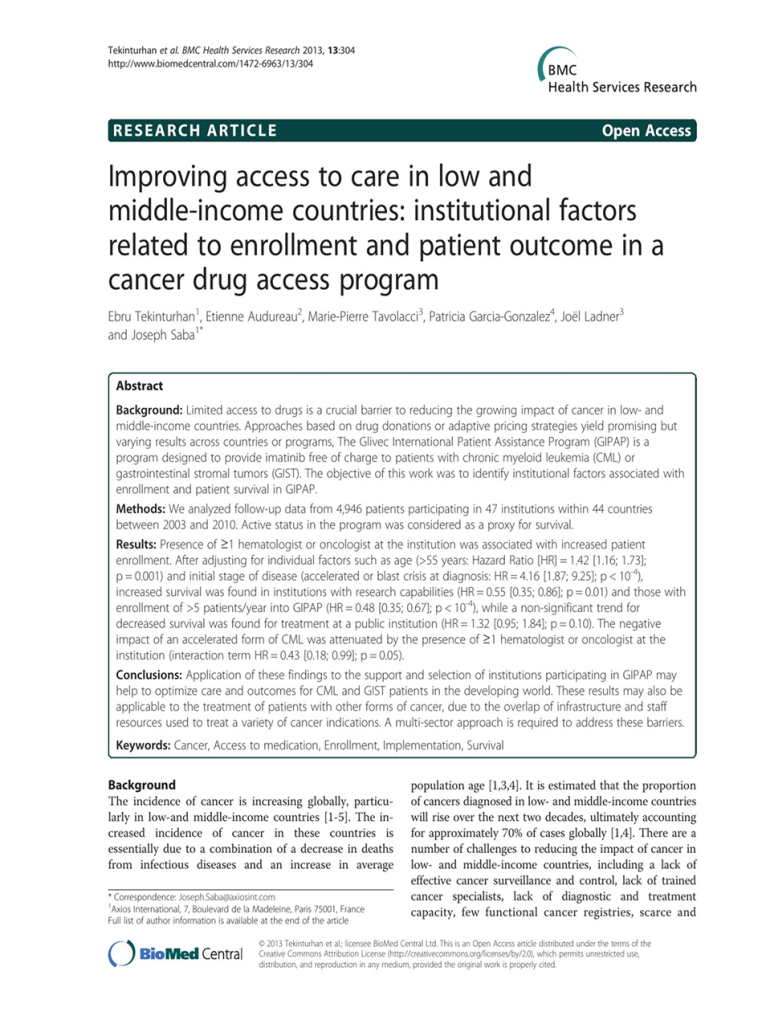
Improving Access to Care in Low and Middle-Income Countries: Institutional Factors Related to Enrollment and Patient Outcome in a Cancer Drug Access Program
Tekinturhan E, Audureau E, Tavolacci MP, Garcia-Gonzalez P, Ladner J, & Saba J.
BMC Health Services Research
Published
Key Takeaways
This study analyzed nearly 5,000 patients across 47 institutions in 44 countries enrolled in the same leukemia drug access program (GIPAP) to identify what institutional characteristics predict how many patients get enrolled and how well they do afterward. Having a hematologist or oncologist on staff boosted enrollment, while institutions with research capabilities and higher patient volumes saw meaningfully better patient survival.
- Institutions with a specialist doctor on staff enrolled more patients, and institutions with research capabilities or that treated more patients per year saw significantly better survival outcomes.
- Older patients and those diagnosed at a more advanced disease stage had worse outcomes, as expected clinically, but institutional factors mattered independently of those patient-level risks.
- The presence of a specialist doctor specifically helped offset the worse outlook for patients diagnosed at a more advanced stage of disease.
- Suggests that access programs shouldn’t just ship free drugs to any hospital that asks. Targeting institutions with the right expertise and capacity can meaningfully improve how many patients benefit and how well they do on treatment.
Resources
Recent Publications