
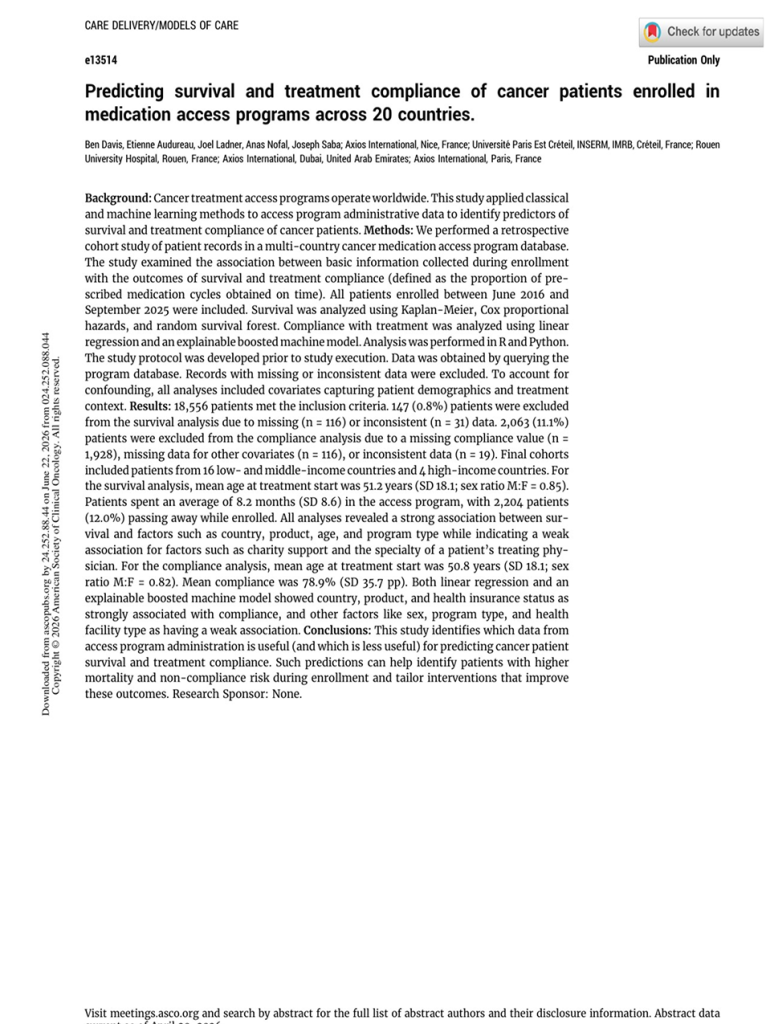
This study analyzed data from over 18,000 cancer patients across 20 countries to see which patient and program factors best predict who survives and who stays on their prescribed treatment schedule. Country, medication type, and age were strongly linked to survival, while country, medication, and whether a patient had health insurance were the strongest predictors of staying on schedule with treatment.
Publication
Predicting Survival and Treatment Compliance of Cancer Patients Enrolled in Medication Access Programs Across 20 Countries
Ben Davis, Etienne Audureau, Joël Ladner, Anas Nofal, and Joseph Saba
Journal of Clinical Oncology
Published
Key Takeaways
This study analyzed data from over 18,000 cancer patients across 20 countries to see which patient and program factors best predict who survives and who stays on their prescribed treatment schedule. Country, medication type, and age were strongly linked to survival, while country, medication, and whether a patient had health insurance were the strongest predictors of staying on schedule with treatment.
- Patients spent an average of 8 months in their access program, with a strong link found between survival and the patient’s country, medication, age, and program type.
- On average, patients received about 79% of their prescribed treatment cycles on time, with country, medication, and insurance status being the clearest predictors of who stayed on schedule.
- Notably, factors like charity support and a doctor’s specialty made little difference to outcomes, showing that broader country- and program-level factors matter more than expected.
- Demonstrates that access programs can use the data they already collect at enrollment to determine which patients may require additional, earlier and/or more targeted support.
Resources
Recent Publications