
This study tracked 64 HIV prevention programs across 25 sub-Saharan African countries over more than a decade to see how well they succeeded in getting the HIV-prevention drug nevirapine to pregnant women who needed it. Coverage improved significantly over time, especially after 2006, and programs run by international agencies or that saw a moderate number of patients performed best.
Publication
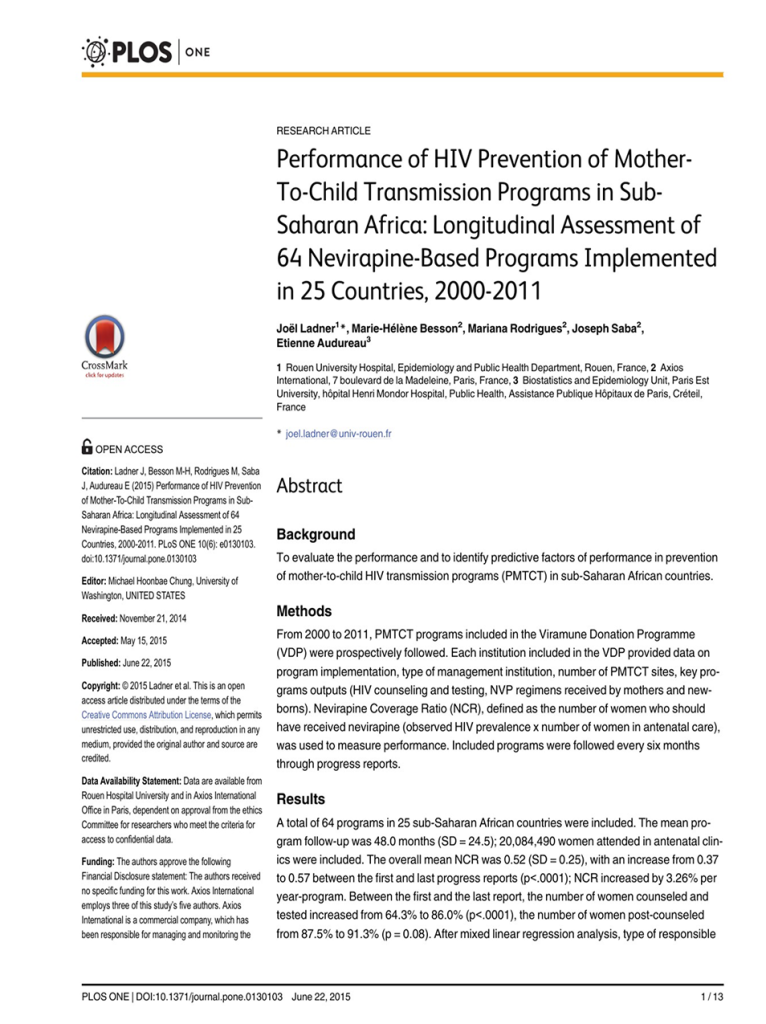
Performance of HIV Prevention of Mother-to-Child Transmission Programs in Sub-Saharan Africa: Longitudinal Assessment of 64 Nevirapine-Based Programs, 2000–2011
Ladner J, Besson MH, Rodrigues M, Audureau E, & Saba J.
PLOS One
Published
Key Takeaways
This study tracked 64 HIV prevention programs across 25 sub-Saharan African countries over more than a decade to see how well they succeeded in getting the HIV-prevention drug nevirapine to pregnant women who needed it. Coverage improved significantly over time, especially after 2006, and programs run by international agencies or that saw a moderate number of patients performed best.
- Programs covered more than 20 million antenatal visits, and the share of eligible women who actually received treatment nearly doubled over the study period.
- Programs seeing very high patient volumes each month performed worse, suggesting that when clinics get overloaded, care quality for individual patients can suffer even as total reach grows.
- Programs run by international agencies achieved better results than those run directly by government health ministries, again pointing to management structure as a key driver of success.
- Shows that sustained, well-resourced programs can make real headway against mother-to-child HIV transmission, but that scaling up too quickly without matching infrastructure carries real risk.
Resources
Recent Publications