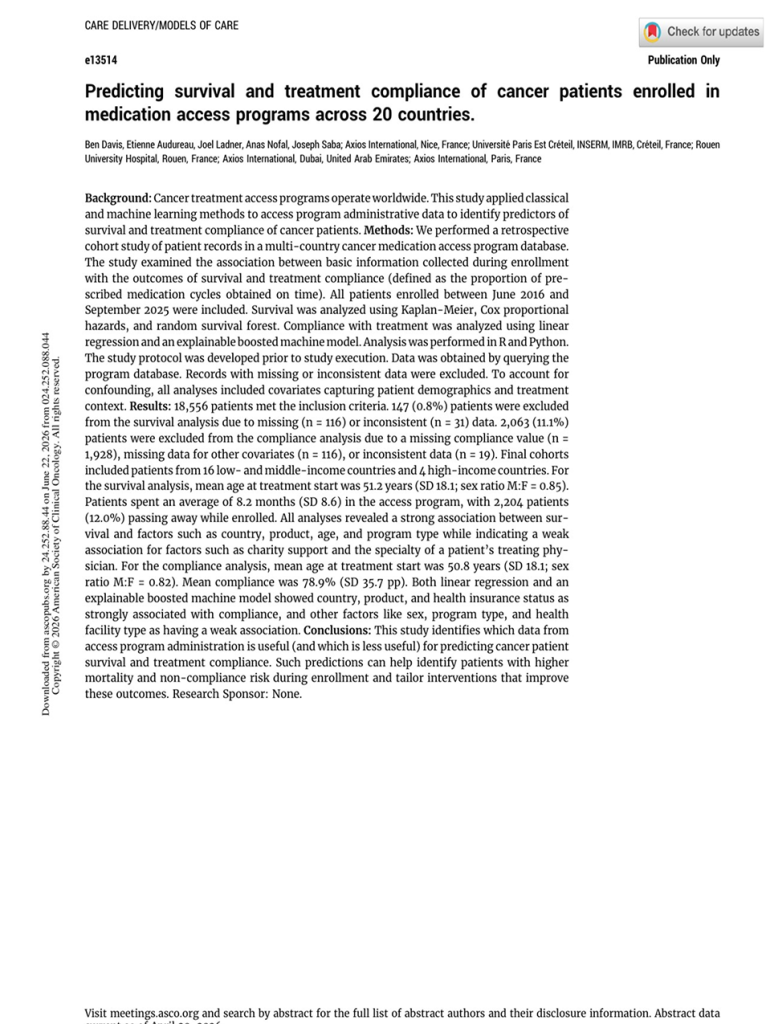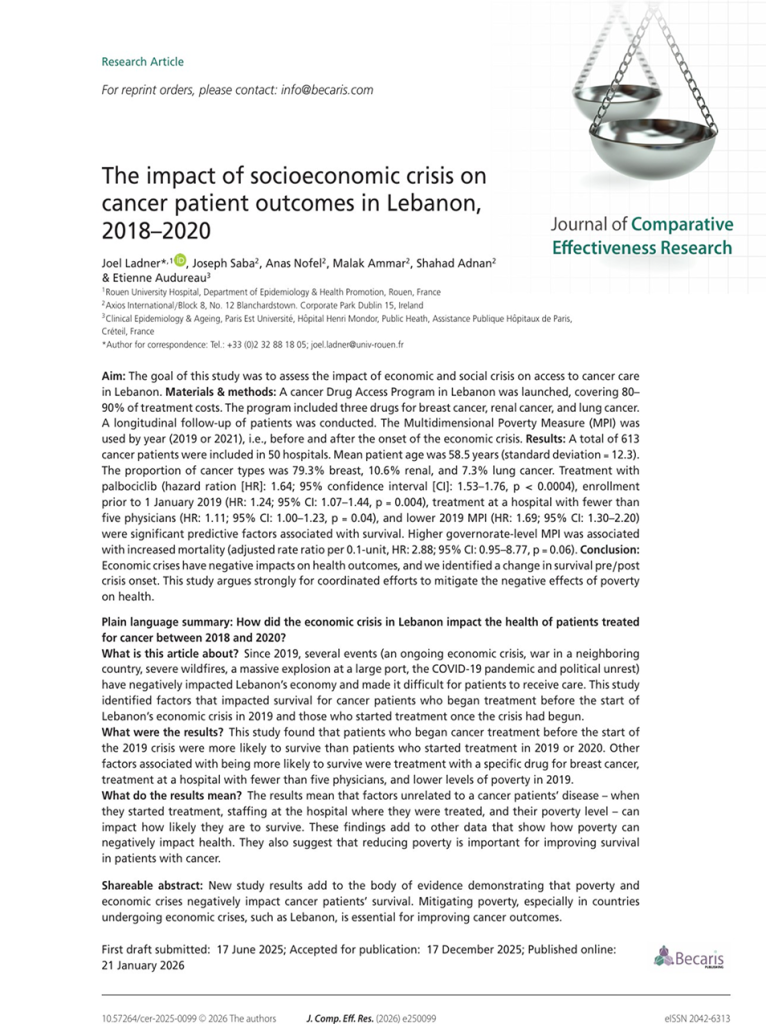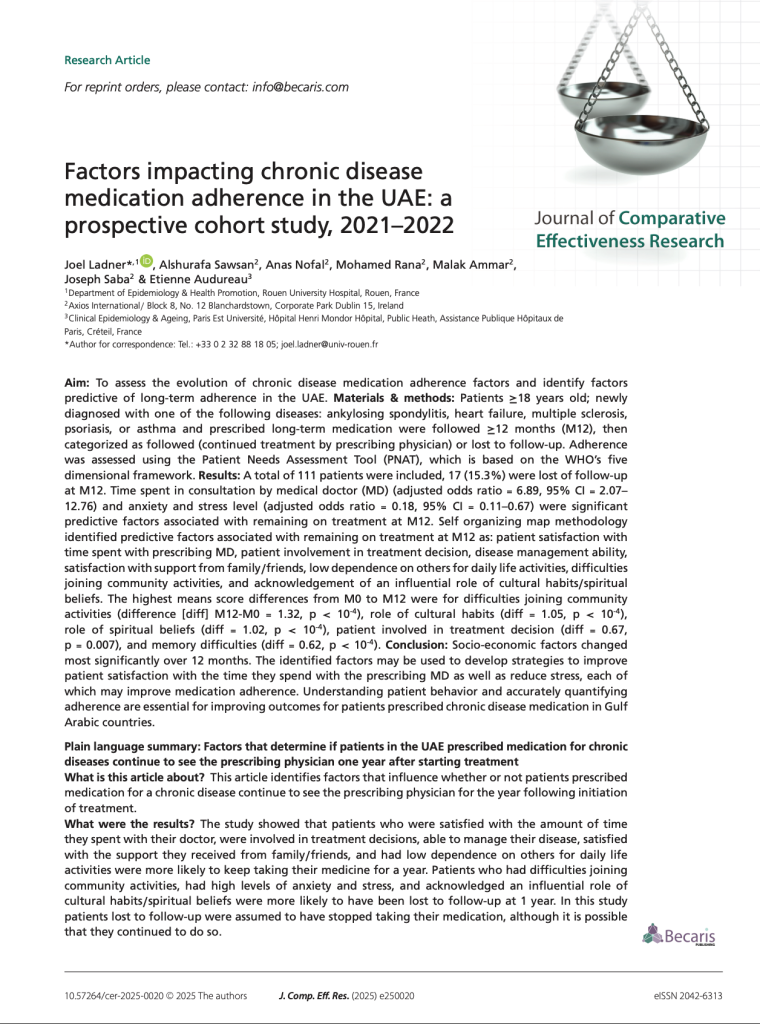

This commentary from Axios researchers proposes a new public health strategy for breast and cervical cancer in developing countries: rather than building separate, stand-alone screening programs, integrate detection for both cancers into existing primary health care services, delivered by nurses at the community level. Drawing on lessons from the HIV/AIDS response, the authors argue that only this kind of integration, paired with community engagement, can realistically reach the large numbers of women who need screening.
Publication
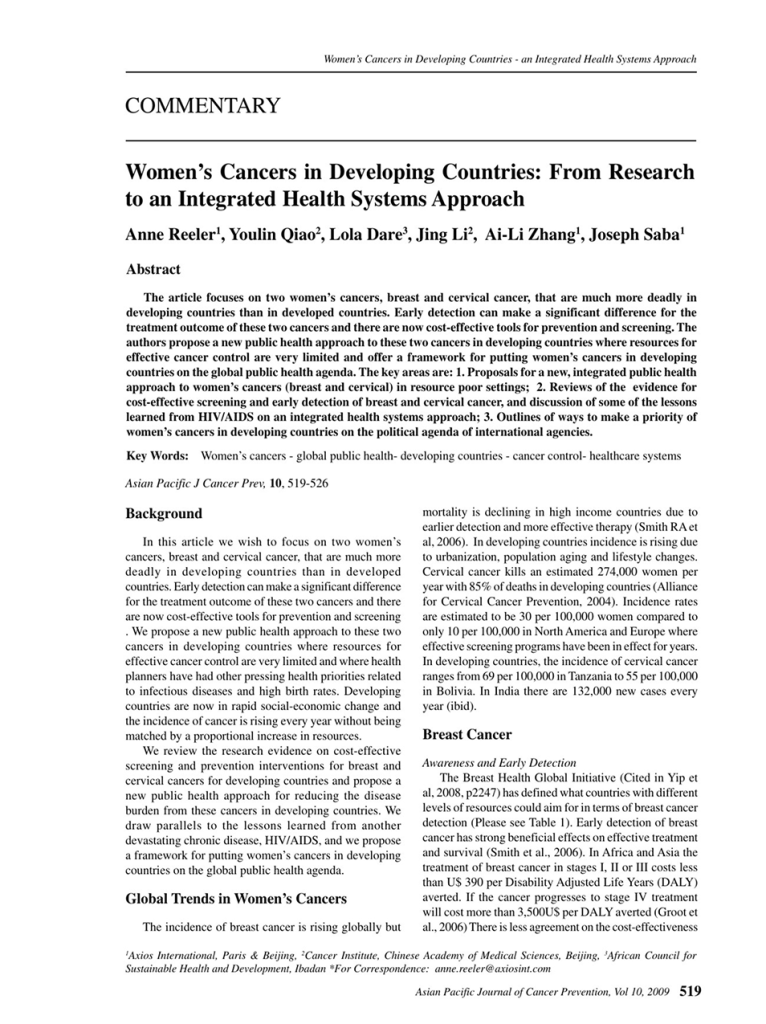
Women’s Cancers in Developing Countries: From Research to an Integrated Health Systems Approach
Reeler A, Qiao Y, Dare L, Li J, Zhang A, & Saba J
Asia Pacific Journal of Cancer Prevention
Published
Key Takeaways
This commentary from Axios researchers proposes a new public health strategy for breast and cervical cancer in developing countries: rather than building separate, stand-alone screening programs, integrate detection for both cancers into existing primary health care services, delivered by nurses at the community level. Drawing on lessons from the HIV/AIDS response, the authors argue that only this kind of integration, paired with community engagement, can realistically reach the large numbers of women who need screening.
- Cervical cancer kills about 274,000 women a year, with 85% of deaths in developing countries, while cost-effective screening methods (visual inspection with vinegar, followed by same-day cryotherapy treatment) can reduce a woman’s lifetime cervical cancer risk by 25-36% for under $500 per year of life saved.
- Clinical breast exams performed by trained nurses are shown to work about as well as mammography at detecting cancer early, making them a far more realistic option for countries with few doctors and no mammography infrastructure.
- The authors propose combining breast and cervical cancer screening into a single visit through mobile clinics, “women’s health days,” and primary care outreach, an approach they say no program had yet tried at the time of writing.
- Drawing directly on the HIV/AIDS response, the paper argues that stand-alone disease-specific clinics get overwhelmed and don’t scale, while integrating screening and follow-up into general health services (with community messengers like traditional birth attendants and religious leaders) is what actually gets people to come forward for care.
- The authors call for a coalition of global cancer organizations to build the same political momentum and international funding (a “Global Fund” model) that transformed the AIDS response, but applied to strengthening health systems broadly rather than a single disease.
Resources
Recent Publications